
The State of Camp Health: Key Findings from Summer 2026
During the summer season, it can be hard to see beyond the day to day. Post-camp is the perfect time to dig a little deeper and see what’s hiding in the health logs.
We recently sat down with CampDoc CEO Michael Ambrose, M.D., and Alliance for Camp Health CEO Tracey Gaslin, PhD, CRNI, CPNP, FNP-BC, to discuss today’s camp health trends and what to expect for summer 2027. As frequent collaborators and co-presenters in the camp health space, Ambrose and Gaslin bring a data-informed perspective that’s born from boots on the ground experience.
Learn what camp health trends caught their attention across medications, illnesses, and injuries so you can set your camp up for success in summer 2027.
Camp Medication Trends
Medication is always a major camp conversation and for good reason: growth is not slowing down anytime soon. According to CampDoc data, camp staff administered 324,000 medications over summer 2026, a 3.4% increase from the previous year. The types of medications are evolving, too.
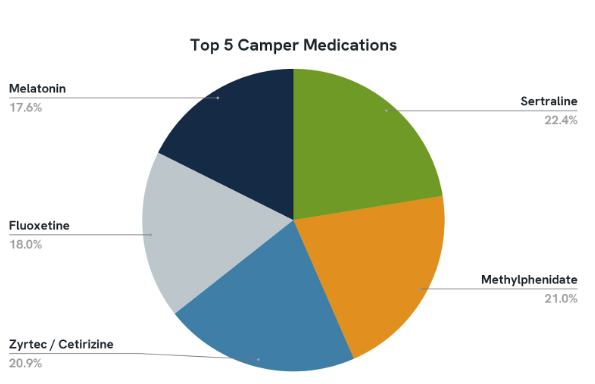
As recently as 2024, allergy medications and antihistamines were the most common camper medications. Of the top five medications CampDoc users administered during summer 2026, only one fell into this category:
- Sertraline (Zoloft)
- Methylphenidate
- Zyrtec / Cetirizine
- Fluoxetine
- Melatonin
Three of the top five medications were psychotropics — antidepressants, anxiety medications, or ADHD stimulants. The increase in behavioral health medications could also explain the prevalence of melatonin, a common sleep aid.
Although not in CampDoc’s top five, epinephrine was the most discussed topic on ACH’s summer health hotline. Gaslin fielded fifteen calls related to medication management, many of which were related to stock requirements, dosing, and parental consent for epinephrine.
Medication Management Policies
With psychotropics dominating the charts, it’s more important than ever to have a robust medication management policy at camp.
“These are serious heavy duty medications that take great care,” said Ambrose. “There’s a lot of responsibility that goes into administering. Having policies and procedures in place to make sure that you are doing exactly what you should be doing and following best practices is critical.”
Camps should start thinking about medication management for next summer now to avoid any surprises down the road. Things to consider as you craft your policy:
- Staff training: identify onboarding and ongoing education opportunities for new and returning staff
- Incidentals: outline what to do if a camper delays or skips a medication due to schedule changes, inclement weather, or accidents
- Family communication: share your medication management plan and advise parents not to skip a dose or change their child’s medication right before camp
Additionally, many of these medications have serious side effects that can be worsened by heat, dehydration, or rigorous activity — aka a typical day at camp. “Understanding how our lived experience can impact the effectiveness of a medication is going to be really important,” said Gaslin. Make sure campers are knowledgeable about their respective medications and care protocols so they can be mindful of their needs amidst changing conditions.
As Gaslin reminded us, medication management is the single most litigated item at camp. A skipped allergy medication might not be the end of the world, but a skipped antidepressant has serious ramifications for both the child and the camp. Make a plan now to avoid confusion or complacency during the summer season.
Illness and Injury: The Importance of Assessment
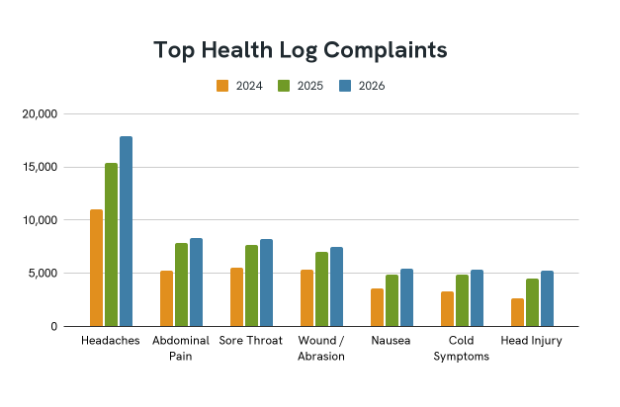
Health log complaints remained relatively unchanged from 2025 to 2026. Headaches topped the charts followed by abdominal pain, sore throats, wounds / abrasions, nausea, cold symptoms, and head injuries. Supportive care and diabetes care entered the top twenty most logged complaints for the first time, showcasing the increasing complexity of campers’ health needs.
Both headaches and head injuries grew 16% from year to year, faster than any other categories. Ambrose advised camp health staff to consult guidelines and best practices for head injury and concussion protocols, including when to allow injured campers to return to daily activities.
“Although these complaints are mostly minor, the key to all of these is that you have someone at camp who is able to assess the individuals,” said Gaslin. A thorough assessment can help you reduce risk for the camp and show families that you’re providing quality care.
For example, don’t just give a camper Tylenol to cure their headache. Ask them what they had for breakfast, how they slept last night, and if they’re drinking enough water. Then, document your assessment in the camper’s official health record for future reference and informed conversations.
Staffing is the Secret to Success
Between medications, illnesses, and injuries, how you approach staffing is critical to a safe and healthy summer camp. It’s not just about filling every position; it’s about filling every position with the most qualified person. “You have to be staffed appropriately,” said Ambrose. “ It isn’t appropriate to have a dermatologist with no pediatric experience as your medical provider.”
Diabetes care is a perfect example. Even if you’re not running a diabetes camp, you will have campers with diabetes. Make sure you have someone on staff who is trained and comfortable with pediatric care. A NICU nurse might be great in a hospital setting, but camp comes with its own challenges and unique circumstances. Find the right people and make sure they are trained for the health services your camp needs before the first day of camp. That means reviewing campers’ health records ahead of time to flag potential concerns and communicate with families before the day one scramble.
Likewise, remind staff that everyone is on the healthcare team — not just the camp nurse. Counselors and activity leads spend the most time with campers and can share valuable observations about changing or concerning behavior. Provide education before, during, and after camp to help staff feel confident in their role and knowledgeable about camp health policies.
Interested in learning more? Catch up with the on-demand webinar for the full conversation.

CampDoc Voted #1 by Customers. Trusted by 1,250+ camps and youth programs.

4.8/5 from 192 Reviews

4.7/5 from 120 Reviews
Streamline your goals with CampDoc.
The only camp management software you need for your best season yet.